Salesforce CEO Says Goodbye To SEO Amidst Disagreement
Salesforce CEO Marc Benioff says goodbye to SEO, but the company's own guide disagrees, stating SEO is still the foundation. This discrepancy may impact how businesses approach their online visibility strategies.
Original reporting · searchenginejournal.com
Original: “Salesforce CEO Says ‘Goodbye SEO.’ Salesforce’s SEO Guide Disagrees via @sejournal, @MattGSouthern”
Read “Salesforce CEO Says ‘Goodbye SEO.’ Salesforce’s SEO Guide Disagrees via @sejournal,…” at Search Engine Journal →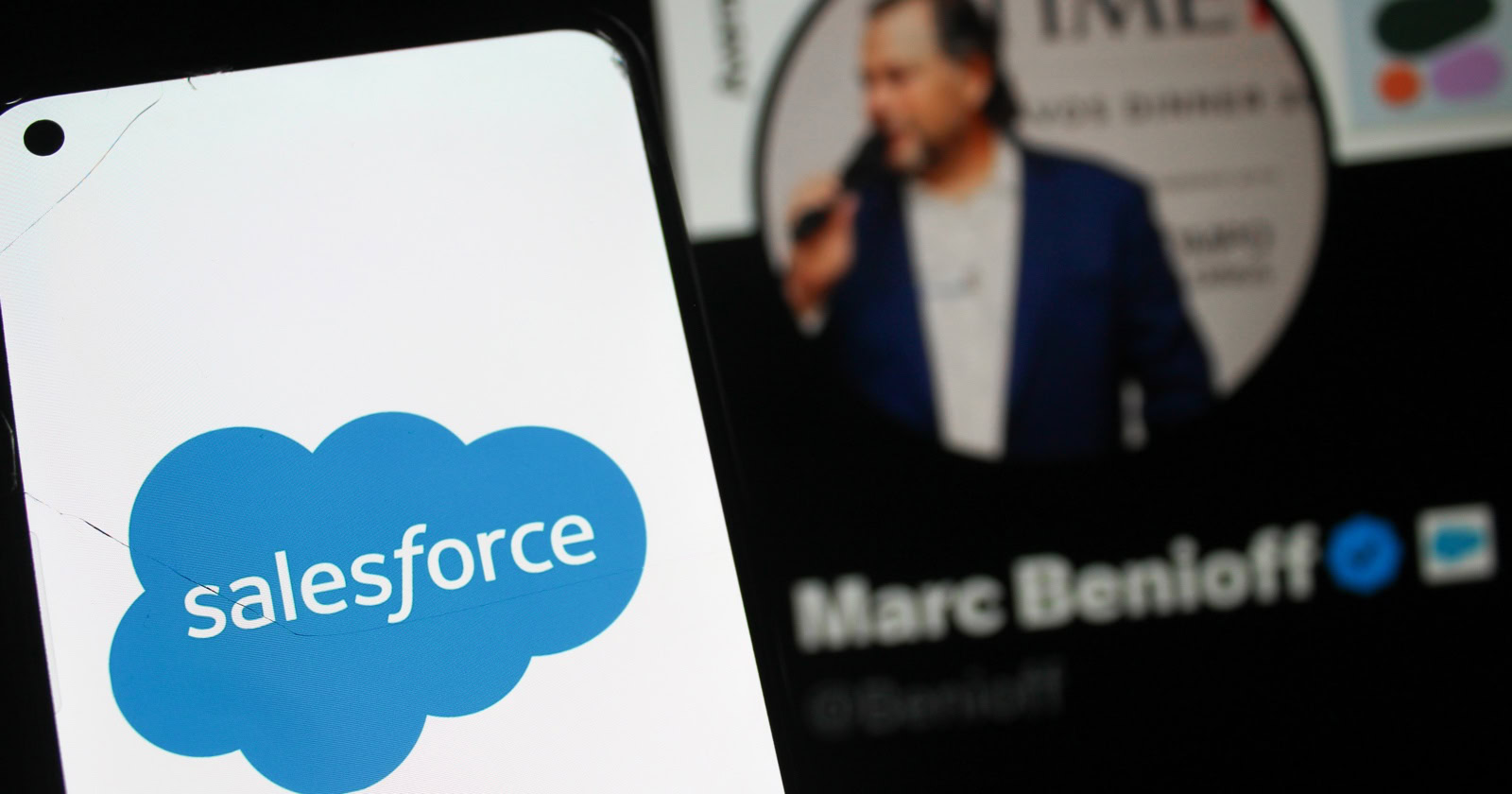
How this was written. Clicktag wrote this article with a language model from Search Engine Journal’s reporting (model: @cf/meta/llama-3.3-70b-instruct-fp8-fast); it describes that reporting rather than adding to it. The original, linked above, is the full story.
Key points from Search Engine Journal’s report
- Salesforce CEO Marc Benioff claims that SEO is no longer relevant, but the company's own guide disagrees.
- SEO professionals argue that traditional SEO remains essential, even in the era of AI-powered search.
- Businesses should consider tracking both traditional SEO metrics and AI visibility metrics to ensure a comprehensive approach.
- Salesforce's guide provides a framework for incorporating both SEO and AI visibility tools into business strategies.
- The company's own tools, such as Marketing Cloud, integrate Palmata, highlighting the potential for a hybrid approach.
Salesforce CEO Marc Benioff recently stated 'Goodbye SEO' on social media, promoting Palmata, an AI-based tool for tracking a company's visibility in AI answers. However, a Salesforce guide linked on Palmata's page claims SEO 'is still the foundation', contradicting Benioff's statement.
Benioff's post suggests that customers are no longer searching online, but instead asking AI assistants for brand recommendations, rendering traditional SEO ineffective. He pitches Palmata as a solution to monitor and improve a business's visibility in AI answers.
Several SEO professionals have countered Benioff's claims, arguing that SEO remains essential. Aleyda Solis, an SEO and AI search consultant, notes that AI search optimization builds upon traditional SEO fundamentals, rather than replacing them.
Salesforce's guide to SEO and AEO, published in September, emphasizes that SEO 'isn't going away' and remains a crucial aspect of online visibility. The guide was written by Graham Hardt, SEO Senior Director, and is intended for new businesses.
The introduction of Palmata, which became a part of Salesforce after the acquisition of Contentful, has sparked debate about the role of SEO in the era of AI-powered search. SEO professionals argue that while AI search visibility is important, it does not replace the need for traditional SEO.
The disagreement between Benioff's statement and Salesforce's guide may impact how businesses approach their online visibility strategies. The guide suggests that businesses should track both traditional SEO metrics and AI visibility metrics to ensure a comprehensive approach.
As businesses weigh the importance of SEO and AI visibility tools like Palmata, Salesforce's guide provides a framework for incorporating both into their strategies. The company's own tools, such as Marketing Cloud, also integrate Palmata, highlighting the potential for a hybrid approach. This article is based on reporting by Search Engine Journal.
Questions and answers
What is Palmata and how does it relate to SEO?
Palmata is an AI-based tool for tracking a company's visibility in AI answers, and it is promoted by Salesforce CEO Marc Benioff as a potential replacement for traditional SEO.
Does Salesforce's guide agree with Benioff's statement on SEO?
No, Salesforce's guide states that SEO 'is still the foundation' and 'isn't going away', contradicting Benioff's claim that SEO is no longer relevant.
How should businesses approach their online visibility strategies in light of the disagreement?
Businesses should consider tracking both traditional SEO metrics and AI visibility metrics, and incorporate both SEO and AI visibility tools into their strategies, as suggested by Salesforce's guide.