Brands Risk Losing Sales Due To AI Shopping Errors
AI shopping results often contain errors, causing brands to lose sales. Fixing these errors is crucial, especially during the holiday season.
Original reporting · searchenginejournal.com
Original: “AI Shopping Errors: What To Fix To Help Shoppers Choose Your Products”
Read “AI Shopping Errors: What To Fix To Help Shoppers Choose Your Products” at Search Engine Journal →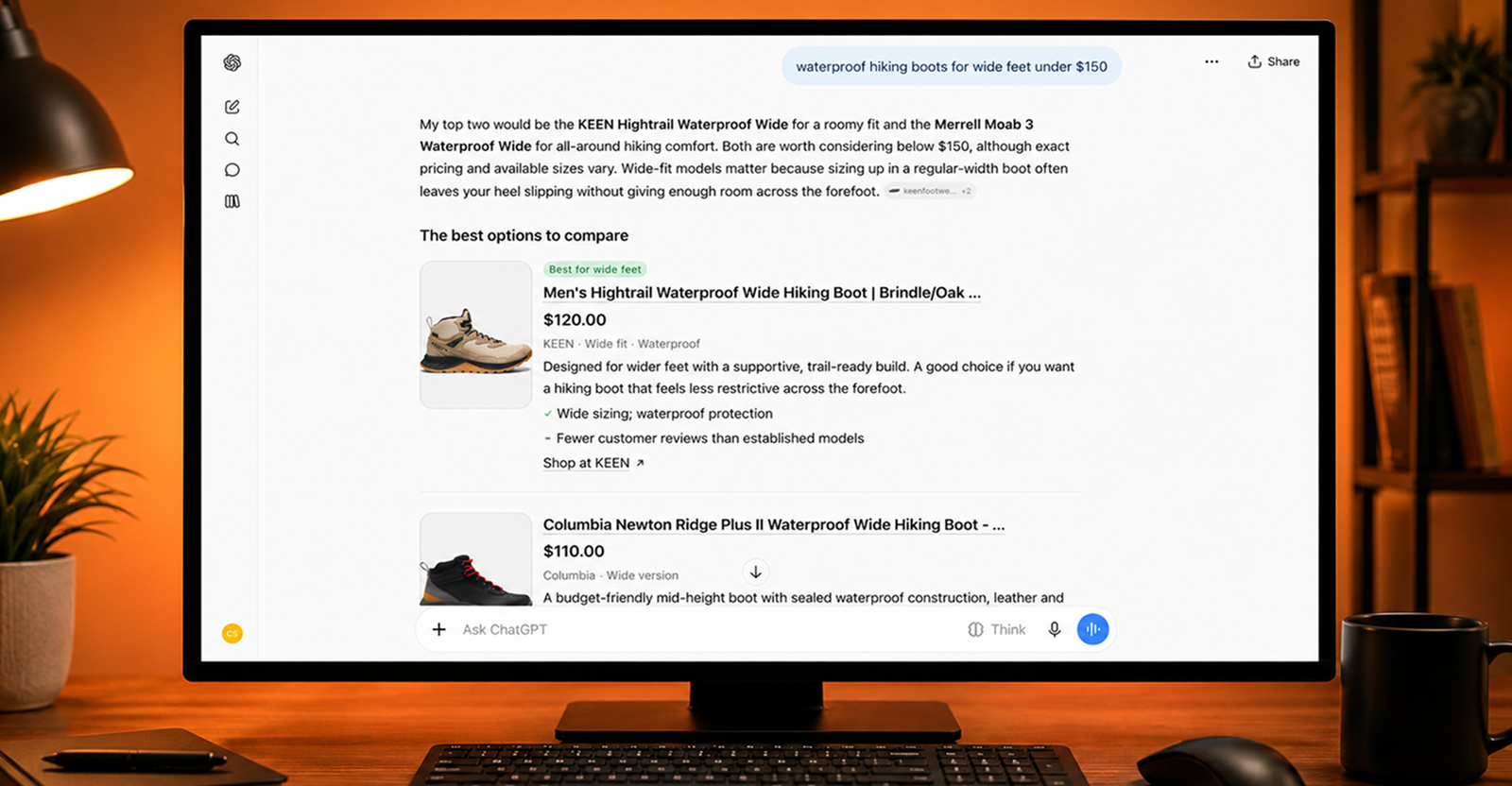
How this was written. Clicktag wrote this article with a language model from Search Engine Journal’s reporting (model: @cf/meta/llama-3.3-70b-instruct-fp8-fast); it describes that reporting rather than adding to it. The original, linked above, is the full story.
Key points from Search Engine Journal’s report
- Brands risk losing sales due to AI shopping errors, which can occur when product data is incorrect or inconsistent.
- AI shopping results are generated from data spread across the web, and brands need to be aware of how their products appear in these results.
- Brands can fix AI shopping errors by auditing their product data, aligning prices and stock, and clarifying product identity with schema and identifiers.
- Regular audits are necessary to ensure that AI shopping errors do not occur, and brands can repeat the same checks over time to track any issues.
- Fixing AI shopping errors is crucial, especially during the holiday season, when AI traffic to US retail sites is expected to grow significantly.
Many brands are unaware of how their products appear in AI shopping results, which can lead to a significant loss of sales. According to Search Engine Journal, this lack of awareness can be a major issue, especially with the holiday season approaching. Adobe forecasts a 130% growth in AI traffic to US retail sites during this time.
AI shopping results typically appear as product cards with prices, ratings, and links to purchase. These cards are generated from data spread across the web, but few brands know how this data is used to position their products. As a result, errors can occur, and brands may not even be aware of them.
There are several ways in which AI shopping results can go wrong. For example, a product may not appear in search results, or it may appear with incorrect details. In some cases, a competitor or reseller may receive the final click instead of the brand itself. Fortunately, these errors can often be traced back to product data that the brand controls.
Search Engine Journal reported that OpenAI expanded its Agentic Commerce Protocol to cover product discovery in March 2026. This allows merchants to share product feeds and have their catalogs appear in ChatGPT. Retailers like Target and Best Buy are already integrated, and Shopify merchants can also participate through Shopify Catalog.
Google also uses AI to generate shopping results, drawing on its Shopping Graph. Merchants can add their products to this graph by uploading feeds to Google Merchant Center. Google says the Shopping Graph holds over 50 billion product listings, and it is used to generate product cards for many shopping searches.
To fix AI shopping errors, brands need to audit their product data and identify any issues. This can be done by building a set of buying prompts from their catalog and running them on different platforms, such as ChatGPT and Google. By comparing the results and prioritizing fixes by revenue impact, brands can ensure that their products appear correctly and attract more sales.
Brands can take several steps to fix product data errors and improve their AI shopping results. For example, they can align prices and stock across feeds, pages, and listings, and clarify product identity with schema and identifiers. They can also make use cases and review information current, and recheck their fixes to ensure that errors do not recur.
Regular audits are necessary to ensure that AI shopping errors do not occur. Brands can repeat the same checks over time and keep an error log to track any issues that arise. By doing so, they can stay on top of any problems and make sure that their products appear correctly in AI shopping results.
Questions and answers
What are AI shopping errors, and how can they affect brands?
AI shopping errors occur when product data is incorrect or inconsistent, causing brands to lose sales. These errors can be fixed by auditing product data and making necessary corrections.
How can brands fix AI shopping errors, and what steps can they take?
Brands can fix AI shopping errors by aligning prices and stock, clarifying product identity with schema and identifiers, and making use cases and review information current.
Why is it important for brands to fix AI shopping errors, especially during the holiday season?
Fixing AI shopping errors is crucial, especially during the holiday season, when AI traffic to US retail sites is expected to grow significantly, and brands can lose significant sales if their products do not appear correctly in AI shopping results.